For the authentic version of this blog - Cleaning. Give it a read and let me know how it is, compared to this version. Needless to say, I’m not really a fan of em-dashes, but it’s okay if that’s all it takes to improve my vocabulary.
Cleaning. Cleaner. Vacuum Cleaner. Floor Cleaner. Roof Cleaner. Pool Cleaner. Dish Cleaner. etc.
My take on the general public’s view of cleaning is that, as a profession, it’s often seen as an easy and severely underpaying job — one that supposedly doesn’t require much intelligence or knowledge, just tools. I deeply respect the profession, and honestly, if it paid enough, I would seriously consider it, lol.
Jokes apart, I don’t know how much I’d love cleaning other people’s stuff, but I genuinely love cleaning and organizing my own things. This applies not just physically, but everywhere else — like my devices, notes, etc. I would probably be the most organized person in the world if I only had the time, and if the effort required to organize things matched the return on investment (which is usually just a fleeting shot of happiness). I wasn’t sure if this topic deserved a dedicated blog post or if there was even enough content to write about. But then I realized I have free will over my blog—I can write whatever I want, and this is something I frequently want to talk about.
State Machines
“State Machines? Are you serious? Why are you like this?” You might ask me, and that is a very valid question.

Fortunately, this is not about Languages, Computation, and Complexity. This has nothing to do with Computer Science either (I mean, technically, everything is a computation, but yeah). I just added the title for fun. In this section, I’ll talk about cleaning the things in my immediate vision or surroundings that belong to me or are used by me.
During my childhood, I wasn’t exactly a fan of cleaning. I used to just scatter things around, use them, and never put them back properly. Honestly, I kind of liked it when things were scattered—it gave me a comforting sense that “everything is reachable and close by”. My mom scolded me on a regular basis, alongside my sister, who caught it at more or less the same frequency.
Around the 8th standard—that’s probably the earliest I can remember—is when I started taking care of things and occasionally cleaning up after myself. Every now and then, I’d get some appreciation from my mother, and I slowly began to enjoy the process.
But when I started preparing for JEE, cleaning became a genuinely important deal for me. Initially, the cycle went like this: I’d see all my books lying around disorganized, and then I’d feel completely overwhelmed by the sheer volume of material I needed to cover. It only worsened when I bought new books; I’d start slacking off while the books slowly accumulated dust. Not to mention, my study room was a massive dust generator (and I had a severe dust allergy at the time). It magically generated unholy amounts of dust within a week of cleaning, practically begging for another deep clean. (If I were to ask my mom about this dark magic, she’d probably just say, “That’s completely normal, why are you yapping?”).
Since I had a lot of books and my own dedicated bookshelf, I had to arrange them neatly to chase that brief shot of happiness. I did, and it worked out surprisingly well. In fact, it actively encouraged me to study in those early days. I found myself far more motivated to sit at a well-organized table rather than a cluttered one.
(Which, of course, is very different from how some others operate).
Coming back to the “State Machine” concept—the point I wanted to make is that while cleaning slowly became one of my hobbies, it also acted as a direct reflection of my state of mind during that period. In my case, I firmly believe that my mental state and the cleanliness of my everyday environment are highly correlated. This might vary from person to person; I’ve observed people who never clean or organize their spaces yet still perform exactly as they usually do. For me, however, it’s a one-way implication: If my mental state is poor, then my surroundings will reflect that. The reverse isn’t necessarily true. I can be doing perfectly fine mentally, and my room could still be a mess.
How did this implication even arise? I think it’s mostly due to a compounding cycle of instances rather than direct root causes. For example, if my room was cluttered, I’d lose interest in studying, which resulted in me slacking off. That, in turn, ruined my mood because I wasn’t being productive, and the cycle continued. There were also visible traces—forensic evidence, if you will—of those episodes that strengthened this correlation. The prime suspect was the only thing actively falling for me: my hair. These days, I’m not overly stressed (though maybe I should be stressed about that?), and I don’t find much hair scattered around my place anymore. But during my JEE preparation, I shed a lot of hair, and I would constantly see it clumping up like crazy near my study table. Those hair clumps were a physical manifestation of stress, serving as another instance of the tuple: (Not clean, Not good mental state). That’s exactly how the implication was cemented.
I was actually able to make good use of this implication at times. Since the contrapositive of a statement is logically equivalent, whenever I felt stressed or depressed, I tried to fix my mindset by first fixing my surroundings. I would clean, reorder, and meticulously arrange my things. I used to worry that this would waste a lot of time (which it admittedly did), but after cleaning, my mental state invariably improved. Slowly, I adopted this strategy to intentionally lighten my mood. I still use this technique today, and needless to say, it has been immensely helpful. It doesn’t magically cure my stress or sadness on its own, but it provides the necessary push to distract me, clear my head, and help me start locking in. Unfortunately, this technique only works when I initiate it myself; it becomes completely counterproductive when my mom notices the pathetic state of my environment and tells me to clean it. So yeah, the “State Machine” was essentially my mind, which could be configured (or have its output altered) based entirely on how ordered my surroundings were.
College Scenario
When I first arrived at college, my room was large enough to grant me a side almost as big as my old study room back home. Better yet, it was entirely mine—unlike the room I shared with my sister during my school years. Throughout my first year, I was rarely stressed or depressed, so I didn’t often feel the need to consciously clean. I occasionally tidied up just for the sake of it, but I rarely bothered folding my clothes or properly aligning my bedsheets and belongings.
Things took a turn when I stepped into my second year. I was assigned a double-sharing room that was very clearly built for a single occupant. Naturally, the space felt suffocatingly congested, and it was no longer easily divisible into sides that we could use independently. To top it off, I had a very “responsible” roommate who would “obey” my every word instantly (Fun fact: I chose this roommate willingly). At the start, I used to clean the entire room for both of us, naively hoping he would feel guilty enough to do it the next time. He never bothered.
Eventually, I started politely asking him to clean up every now and then. Whenever he left for home, he’d usually leave his bed in an absolute state of chaos. It seriously annoyed me, but feeling helpless, I didn’t say much—sometimes, I’d silently arrange it myself and pretend it was never cluttered to begin with. Even after explicitly asking him to clean multiple times, it rarely seemed to register. I eventually gave up, strictly cleaned only my side, and adopted a brilliant new strategy: “If it isn’t visible to my eyes, it isn’t dirty.” It worked surprisingly well, to be honest.
During the even semester of my second year (which I consider the semester of peak stress and depression), I hit a wall where I simply didn’t want to do anything. I didn’t feel like studying, talking to my friends, playing my favorite games, or even listening to my playlists. I couldn’t even bring myself to scroll through Reels. All I did was lie in bed, agonizing over why I felt so empty.
The crucial turning point that managed to snap me out of that state was a sudden, harsh thought:
“Look how pathetic you and your surroundings look, all over the silliest thing that has happened in your life. Look at this pathetic guy lying in bed, entirely incapable of doing the bare minimum—keeping his surroundings neat and ordered. Look at how hopelessly he’s lying there over such a trivial issue. Weak and pathetic, as always.”
Usually, my thoughts (or at least how I process them) function like an internal two-way conversation or monologue. (I desperately want to dedicate a whole blog post to my thought processes soon). In short, at any given moment, there are multiple voices and ideas interacting in my head to reach a conclusion. When that harsh thought surfaced, I realized that my current state was exactly what my past self would have despised seeing my future self become.
That thought provoked my ego and deeply held ideologies. I quickly forced myself out of bed, hastily cleaned my table yet again, folded my clothes, completely swept the room, and took a shower. It didn’t magically resolve all my inner turmoil, but it provided me with a clean, functional space to start grinding again—and that’s how I managed to bounce back so quickly. I wouldn’t claim that cleaning alone completely saved me (that would be a massive disservice to the people, habits, and mindset shifts that actually pulled me through), but it was undeniably the catalyst.
Today, I’m sitting at my table writing this blog. I just finished cleaning my side of the room, ready to lock in again after a mild depressive episode yesterday. My current roommates rarely clean their side of the room—in fact, I can almost guarantee they never do. I’ve told them multiple times as well, but clearly, my words in this context carry zero weight. I’ve completely stopped caring about it, so it’s all good for now.
Other forms of cleaning
Notes
Organizing and reordering my notes is something I did constantly during my JEE preparation. I was always a massive fan of handwriting my notes. I firmly believed it increased my retention, plus, watching myself craft neat letters was just a deeply satisfying feeling. It took an incredible amount of time and effort to maintain such meticulous, tidy notes, but I’d say it was absolutely worth it, especially as the exams drew closer.
Even today, I vastly prefer writing over typing. I genuinely love taking notes—especially with my current go-to pen. I love it so much, in fact, that I bought a massive bulk set of them (the LINC Maxo, for anyone interested) just so I could endlessly experience the joy of writing. Although I don’t have the luxury of time to organize my notes perfectly anymore, it isn’t strictly necessary; my raw notes are usually good enough on their own.
Devices
Deleting old files, purging useless photos, ordering playlists, and organizing my study materials are things I do regularly. (I wish I organized my code like this too, but apparently, I’m just terrible at it—major skill issue).
Every semester, without fail, I change my IDE color theme, my phone’s wallpaper, and my laptop’s aesthetic to give myself a fresh feel and a clean slate. I typically do this right around the start of vacations or during a depressive slump to lift my spirits. While these digital chores consume a lot of time and are arguably entirely unproductive, I still do them purely for those aforementioned “shots of happiness.” While organizing, I also get to visibly track my progress over time (especially when sorting old photos), which hits me with great waves of nostalgia. I’ll even do this stuff just out of sheer boredom. Honestly, even my Clash of Clans base has a hyper-organized layout, just to farm that silly, short-lived sense of orderliness.
Mental State
My mental state is something that gets cleaned constantly—practically with every single passing thought. Filtering through loads of useless, intrusive thoughts has become a strict daily routine. At this point, I’ve found that simply ignoring them is just as effective as filtering them. I no longer waste energy pondering over intrusive clutter (I’ve realized it’s entirely useless), and trying to dig down and “fix” the root cause is usually a futile effort.
Honestly, self-gaslighting is one strategy that just works brilliantly for me most of the time. Tweaking my ideologies here and there, organizing my decision-making trees, weighing alternate perspectives, and strictly budgeting the time and effort I allow per thought have all become automatic processes. It comes naturally now, thanks to the sheer amount of mental experimentation I’ve done on myself. It isn’t flawless, but it keeps the machine running.
Final Thoughts
Interestingly, this turned out to be a much longer blog post than I originally anticipated. I never intended to finish it all in one sitting, but I found the time to structure my ideas and ended up wrapping it all up in about two hours. I’m incredibly thankful to the person who motivated me to start writing again today.
To wrap this up: cleaning as a hobby is something very special and deeply personal to me. I truly hope I never reach a state in life where I become physically or mentally incapable of cleaning my own surroundings.
Oh, and speaking of cleaning—I am notoriously terrible when it comes to cleaning my internal body (my health/diet). Like I mentioned earlier, I still religiously follow the heuristic of “If it isn’t visible, then it isn’t dirty.” I know I desperately need to change this habit before the internal effects start clumping up and wreaking havoc.
Ironically, after writing this entire manifesto on cleaning, I just glanced over at my bed, and it looks like this:
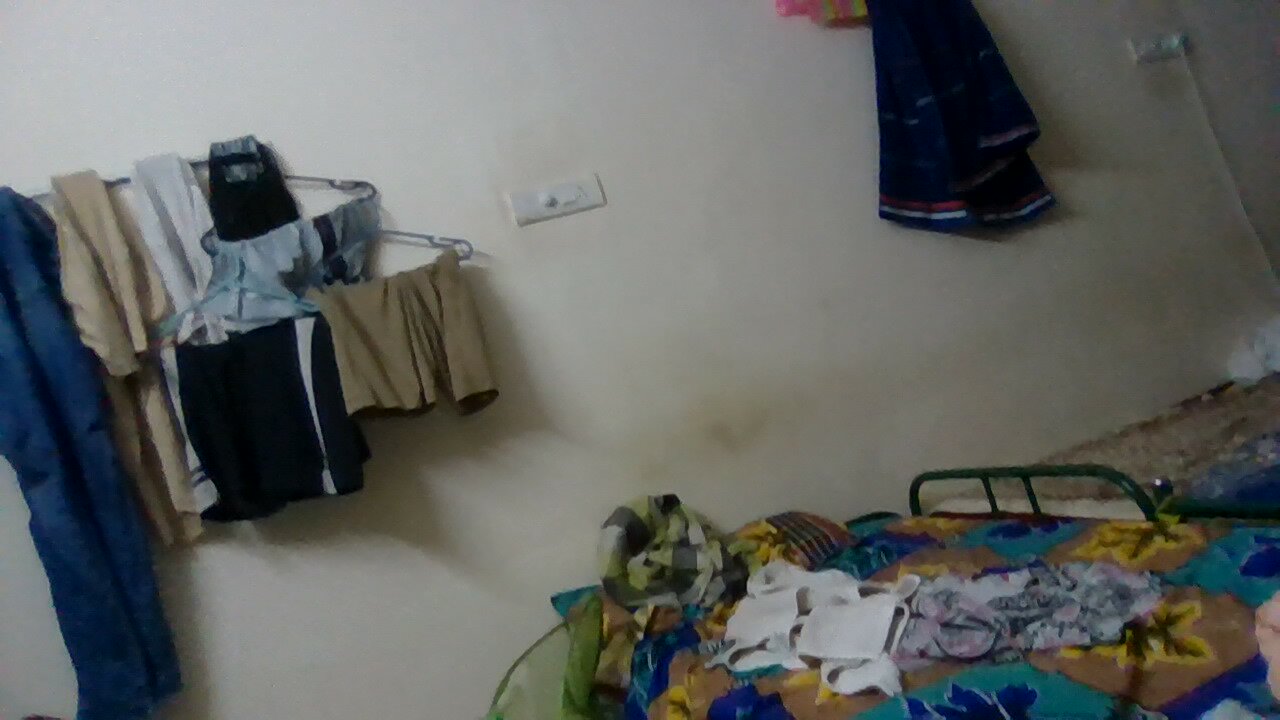
Yeah, it’s completely cluttered. But it’s cluttered for a very strategic reason: to actively prevent me from lying down and wasting time. After all, if your bed is cleaner and more inviting than your study table, would you honestly choose studying over sleeping? 🙃